WHEN REBA AND MIRANDA STEPPED BACK — 50,000 VOICES TURNED DOLLY PARTON’S SONG INTO A…
Introduction
There are moments in country music when the most powerful thing a singer can do is stop singing.
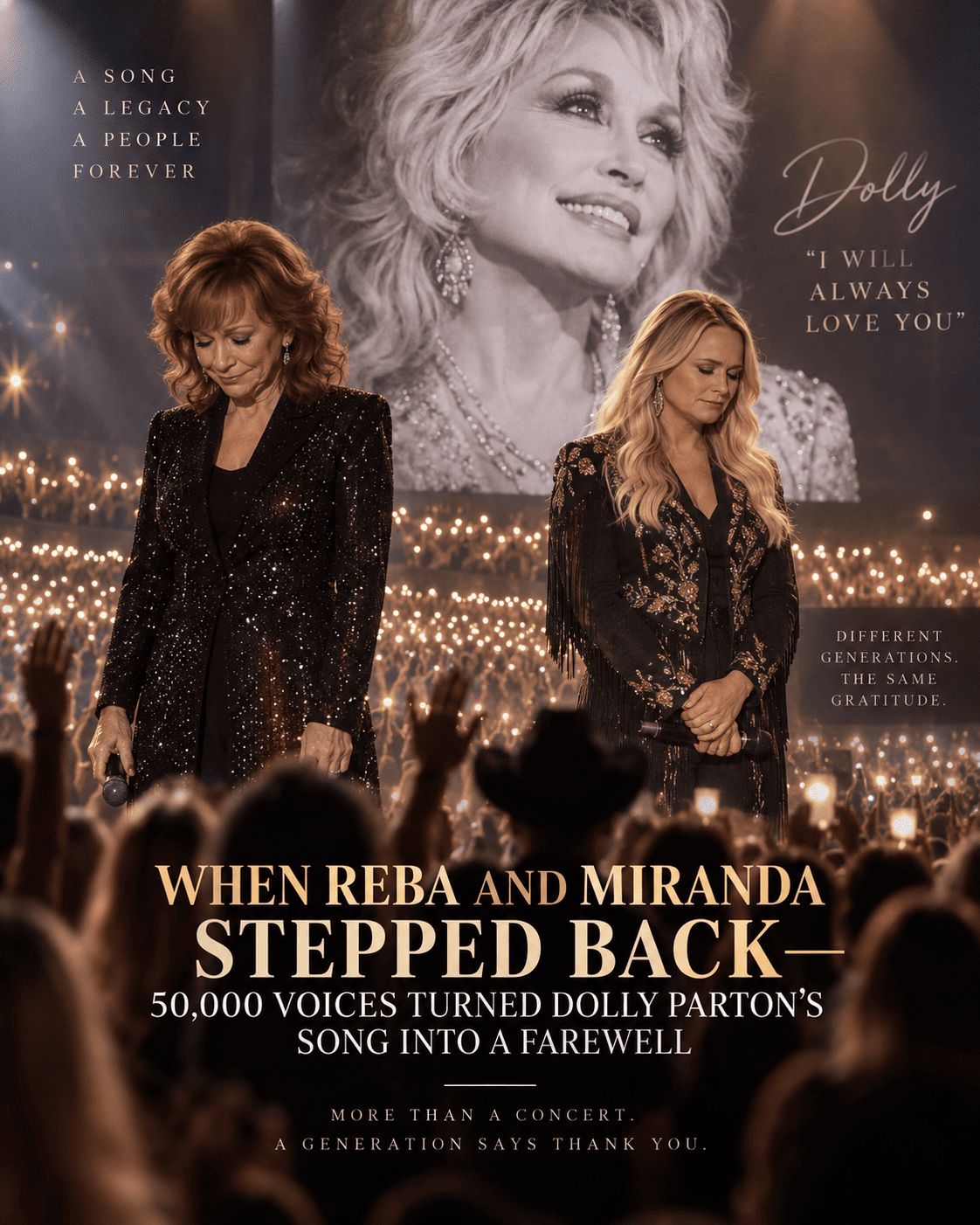
Imagine a stadium filled almost beyond capacity. The lights are low. The audience is waiting. Somewhere beneath the quiet, the first familiar notes of “I Will Always Love You” begin to emerge.
At center stage stand Reba McEntire and Miranda Lambert.
For a moment, everyone expects them to sing.
Then something unexpected happens.
They step back.
The microphones remain in their hands, but neither woman raises hers. Behind them, Dolly Parton’s image appears across the enormous screen, and the atmosphere changes almost instantly. What had been a concert becomes something much more intimate—a shared remembrance.
Then one voice from the audience begins the song.
Another follows.
Then another.
Soon, the sound is no longer coming from the stage.
It is coming from everywhere.
In this imagined tribute scene, thousands of people begin singing Dolly’s song together, transforming a familiar country standard into something resembling a great communal hymn. The musicians become almost secondary. The stars become witnesses. And the audience, rather than simply listening, becomes the voice.
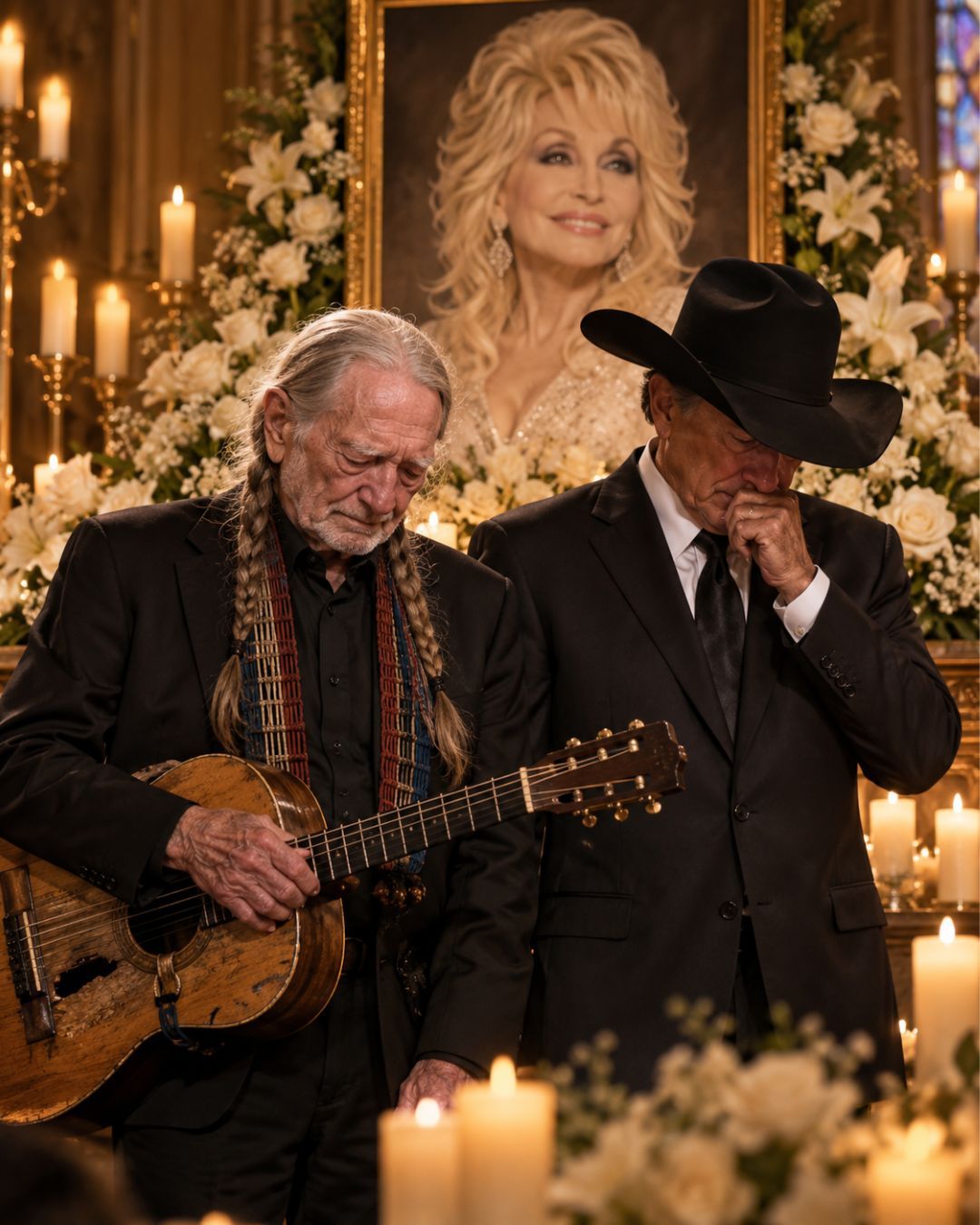
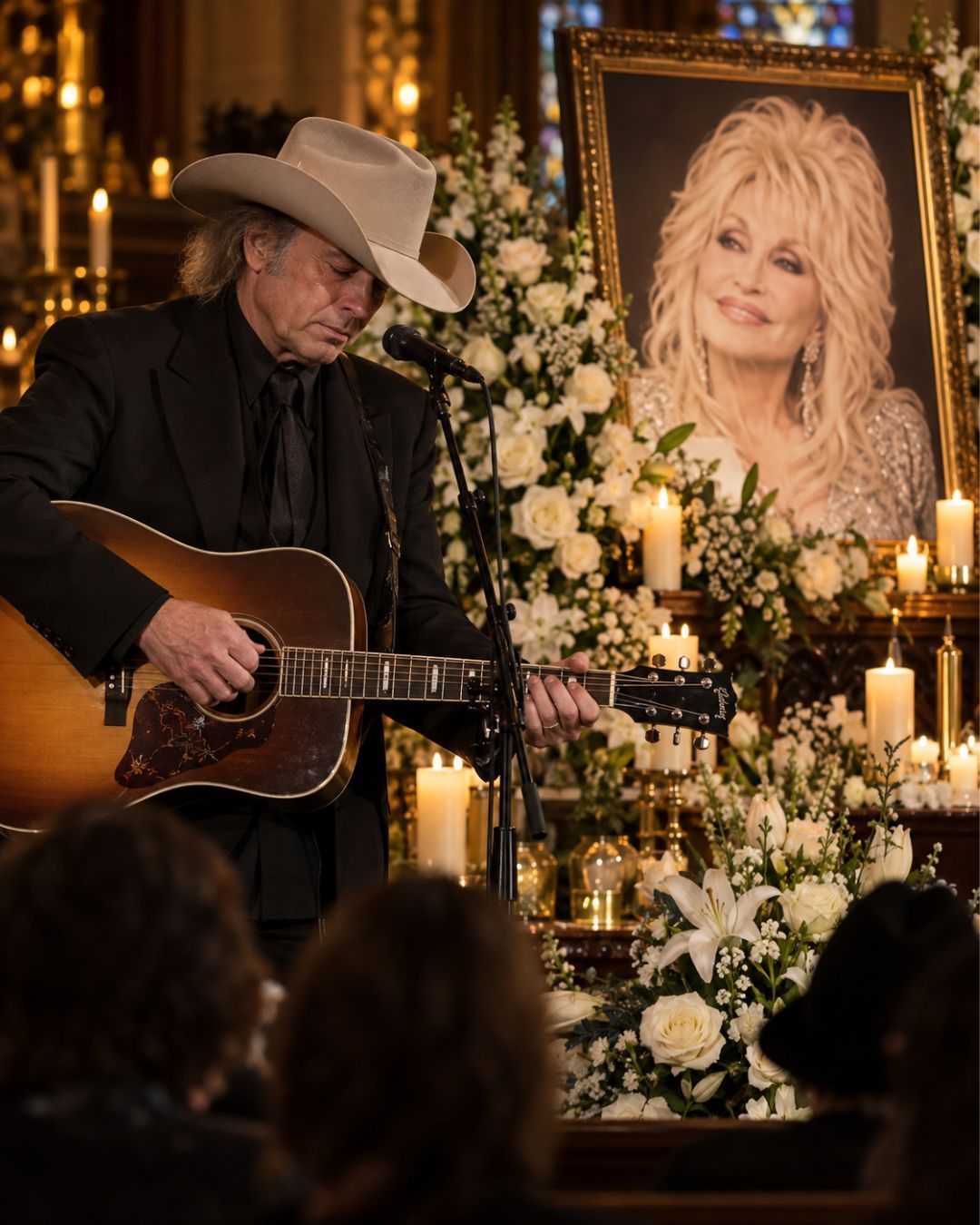
That image carries particular weight in September 2026, following Dolly Parton’s death on August 25 at the age of 80. Tributes have continued across the music world, including Reba McEntire’s deeply personal remembrance of her longtime friend and a major televised celebration of Parton’s legacy planned for Nashville.
But the emotional power of this imagined moment comes from something very real about Dolly’s music: her songs have always belonged to more than one generation.
“I Will Always Love You” is perhaps the clearest example.
Dolly wrote the song in the early 1970s as she prepared to leave The Porter Wagoner Show and begin the next chapter of her career. It was not originally written as the grand romantic ballad many listeners later came to understand it as. It was a song about leaving with gratitude, remembering what had been shared, and wishing another person well while moving forward. Dolly’s original recording reached No. 1 on the country chart in 1974, and she returned to the song again in 1982 and in a 1995 duet with Vince Gill.
Then came Whitney Houston’s extraordinary 1992 recording, which introduced the song to another enormous audience. Her version became a global phenomenon, spending 14 weeks at No. 1 on the Billboard Hot 100 and later entering the Library of Congress National Recording Registry.
Yet beneath all those versions, the heart of Dolly’s composition remained remarkably simple.
Goodbye. Gratitude. Memory. Love.
That is why the imagined sight of Reba and Miranda stepping aside feels so meaningful.

Reba belongs to the generation that knew Dolly not simply as an icon on television or a name on an album cover, but as a fellow artist and friend. Their relationship stretched across decades, including appearances together at major country music events and musical collaborations. After Dolly’s death, Reba publicly reflected on their long friendship and the significance of their final conversations.
Miranda Lambert represents a later generation of country music—an artist who came of age in a musical landscape profoundly shaped by women who had already fought to define their own voices.
Put those two artists together, and the symbolism becomes difficult to miss.
They do not compete with Dolly.
They make room for her.
And perhaps that is the most beautiful tribute an artist can offer another artist.
In the imagined stadium, Reba lowers her eyes. Miranda holds her microphone at her side. Neither tries to reclaim the spotlight.
Instead, they allow the people in the seats to sing.
Older fans know every turn of the melody. Some may have first heard Dolly sing the song decades ago. Others may remember Whitney Houston’s version from the 1990s. Some may simply associate those familiar words with a person, a place, or a chapter of their own lives.
That is the extraordinary thing about songs that survive for generations.
They collect memories.
They travel through kitchens, cars, family gatherings, quiet evenings, old record collections, radios, television screens, and long drives home. Eventually, the song becomes attached not only to the artist who created it but also to the lives of the people who carried it with them.
And that is why the idea of 50,000 voices matters.
The number is part of the imagined scene, not a documented performance. But as a storytelling image, it captures something true about Dolly Parton’s legacy: the ability of one songwriter’s words to become part of the emotional vocabulary of millions.
Perhaps the imagined final moment would be the quietest.
The final note disappears.
The musicians stop.
Reba does not speak.
Miranda does not speak.
The audience remains silent for several seconds.
Then comes the applause.
Not the explosive applause that follows a spectacular vocal performance.
Something slower.
Deeper.
The kind of applause that feels less like entertainment and more like thanksgiving for a life that mattered.
Dolly Parton’s legacy is far larger than one song. It encompasses decades of songwriting, recording, film, television, business, philanthropy, and cultural influence. At the 2026 Americana Honors & Awards, she was posthumously presented with a Lifetime Achievement Award, with a pre-recorded message from Dolly shown to the audience. Emmylou Harris also paid tribute to her legacy, and the ceremony concluded with a performance of “Coat of Many Colors.”
There is also something especially fitting about the fact that “I Will Always Love You” continues to return whenever people need language for goodbye.
Dolly wrote it when she was leaving one chapter behind.
Decades later, audiences continue to find new meaning in it.
And now, after her passing, those same words carry another layer of emotion.
Not because the song was originally written for this moment.
It wasn’t.
But because great songs have a strange ability to grow older alongside us.
The meaning changes as we change.
A song that once sounded like a professional farewell can eventually sound like a farewell to an era. A melody remembered from youth can suddenly become a reminder of everyone who came before us. And a voice we once heard through a radio can become part of the soundtrack of our own memories.
That may be the real power behind the imagined scene of Reba and Miranda stepping back.

The greatest tribute is not always another spectacular performance.
Sometimes it is knowing when to let the audience sing.
Sometimes the artist on stage does not need to say another word.
Sometimes the people in the seats already know the song by heart.
And sometimes, when thousands of voices rise together, the stage becomes almost unnecessary.
Because Dolly Parton’s music is no longer only being performed.
It is being remembered.
It is being carried forward.
And in that imagined final moment, with Reba and Miranda standing quietly beneath the lights, 50,000 voices would not simply be singing a song.
They would be holding onto a piece of music history.
A piece of memory.
A piece of Dolly.
And for one unforgettable moment, the farewell would not belong to the stage at all.
It would belong to everyone.