
MICHAEL ENGLISH AND DAVID PHELPS LEFT DIFFERENT MARKS ON GOSPEL MUSIC — HERE IS WHY THEIR VOICES STILL STAY WITH…
Introduction
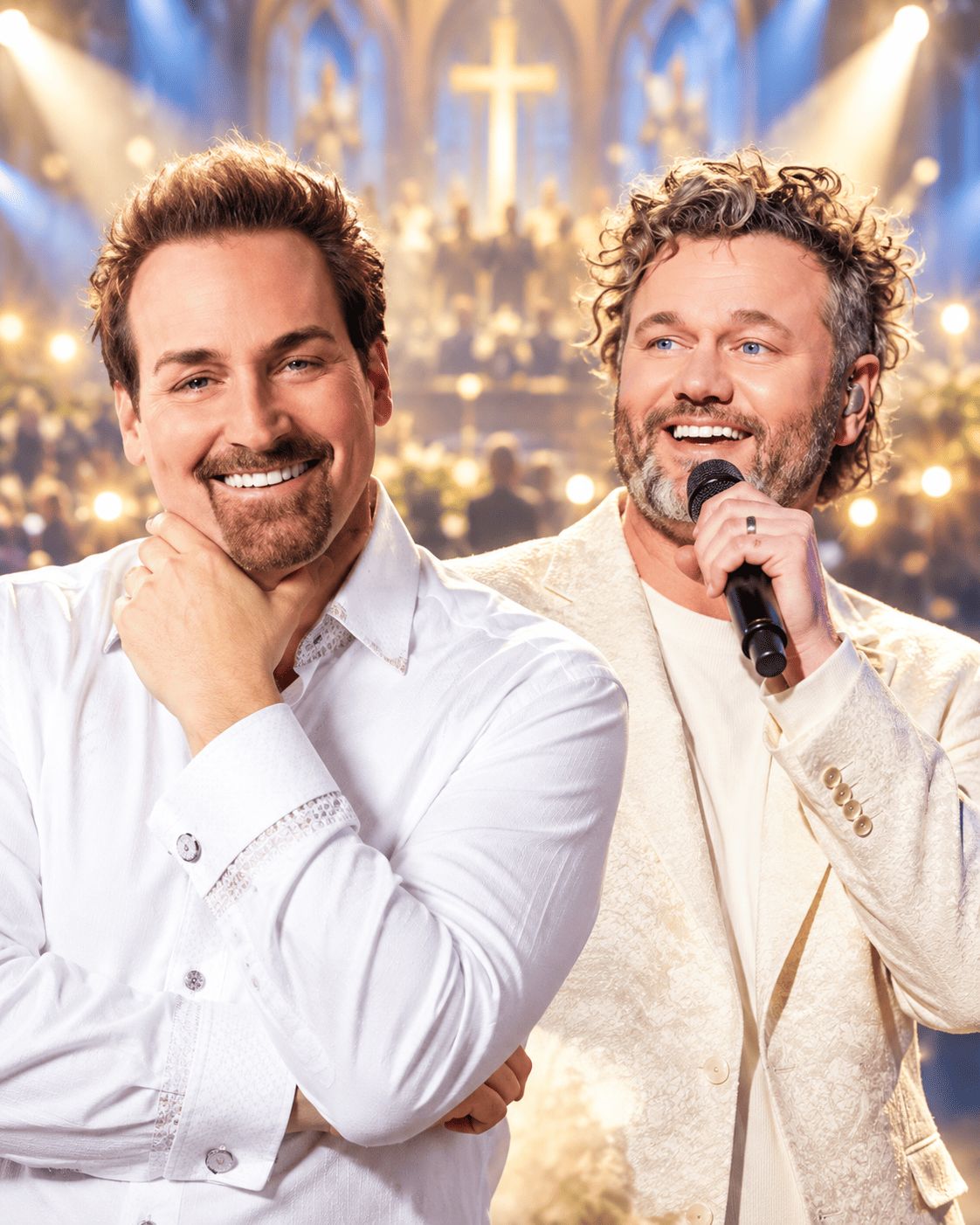
A great Gospel voice does more than reach the ear. It finds its way into memory, sometimes returning years later when a familiar melody brings back a season of life we thought we had left behind. Michael English and David Phelps helped shape different chapters of the Gaither Vocal Band story, yet both remind us of something timeless: a voice becomes unforgettable not simply because of how beautifully it sings, but because of what it helps us feel, believe, and remember.
Michael English: The Power of a Voice That Feels Every Word
There are moments in Gospel music when a singer seems less interested in displaying a voice than in sharing a truth. That quality is part of what makes Michael English such a compelling performer.
Throughout his association with the Gaither Vocal Band, English became known for a powerful, emotionally expressive voice capable of bringing warmth and conviction to a song. His singing can carry a sense of personal testimony, as though the words have traveled through a life of their own before reaching the listener.
Consider his performance of I Bowed on My Knees, a song whose central message invites listeners to contemplate the wonder of encountering the Lord. The subject itself is deeply personal for many Christians. It speaks to the hope of heaven, the promise of redemption, and the desire to one day stand in the presence of the One they have worshipped throughout their lives.
What makes English’s interpretation compelling is the relationship between the song’s message and his delivery. Rather than treating the melody as an opportunity for vocal display alone, he brings an expressive quality to the performance that helps the listener follow the emotional journey of the lyrics.
His voice can sound strong without losing its tenderness. There is room for conviction, but also for wonder. That balance is particularly meaningful in Southern Gospel, where a song’s effectiveness often depends on the singer’s ability to communicate both the grandeur of Christian belief and the intimate feelings of an individual believer.
For longtime fans, such a performance may recall a familiar sanctuary, a cherished family gathering, or a Sunday morning when a particular hymn seemed to speak directly to the heart. The music becomes connected to something larger than the performance itself.
And that is one reason Michael English remains memorable: he can make a deeply held belief feel like a personal conversation.
David Phelps: Precision, Expression, and the Building of a Musical Moment
If Michael English often draws listeners in through emotional sincerity, David Phelps offers another fascinating dimension of Gospel expression: the combination of remarkable vocal control, musical precision, and dramatic development.
Phelps possesses an unusually wide vocal range, and his work with the Gaither Vocal Band demonstrated how that ability could serve the larger purpose of a song. His performances are often admired for their demanding high passages, but focusing exclusively on those moments misses much of the artistry.
His interpretation of He’s Alive provides a particularly revealing example.
The song celebrates the resurrection of Jesus Christ, the defining event at the heart of Christian faith. Its message is not merely that something extraordinary happened long ago. It is a declaration of hope, victory over death, and the enduring promise that gives Easter its meaning for believers.
A performance of this song must do more than deliver the notes accurately. It must help the audience experience the progression of the story, moving from the weight of the crucifixion toward the joy and triumph of the resurrection.
Phelps approaches that musical journey with a strong sense of structure. His control allows the melody to develop, while changes in intensity help build anticipation. When the performance reaches its more powerful passages, the effect comes not only from the height or strength of the notes but also from the musical journey that has led the audience there.
That distinction matters.
A high note may impress a listener for a few seconds. A carefully developed performance can make the meaning behind that note stay with someone much longer.
In He’s Alive, vocal technique becomes a means of communicating the central message. The artistry serves the testimony, and the testimony gives the artistry its deeper significance.
For Gospel fans, this is where faith, music, and inspiration meet. The singer’s ability is evident, but the message remains at the center.
Two Different Voices, One Enduring Gospel Tradition
It would be easy to turn Michael English and David Phelps into rivals, measuring their voices against one another and asking which singer made the greater impression.
But that question misses what makes their contributions valuable.
Their performances of I Bowed on My Knees and He’s Alive are separate musical experiences, each shaped by a different song, interpretation, and emotional journey. They should not be treated as a duet or as competing versions of the same performance. Instead, they offer an opportunity to understand the different ways Gospel music can communicate a shared foundation of belief.
English brings a quality of emotional directness that can make a song feel intimate and personal. Phelps demonstrates how precision, range, and carefully shaped intensity can give a musical testimony extraordinary momentum.
Neither approach diminishes the other.
In fact, their differences illustrate the richness of the Gaither Vocal Band tradition. Over the years, the group has welcomed singers with distinct vocal identities, temperaments, and musical strengths. What connects them is not a requirement to sound alike, but the opportunity to bring individual gifts into a shared musical purpose.
That is one of the enduring strengths of Gospel harmony. Each voice has its own character, yet the voices can come together to support a message greater than any single singer.
The same principle applies to the listeners. Some people are moved most deeply by a gentle phrase delivered with sincerity. Others respond to a soaring melody that builds toward a powerful declaration of hope. Many appreciate both, depending on the song and the season of life in which they hear it.
There is no single formula for a meaningful Gospel performance.
Sometimes the smallest vocal detail is what stays with us. Sometimes it is the gradual rise of the music, the blending of voices, or the silence that follows a final note. And sometimes it is simply a lyric that reminds us of something we needed to hear.
Why These Voices Still Matter to Longtime Gospel Fans
For those who have followed the Gaither Vocal Band through different eras, singers such as Michael English and David Phelps represent more than individual musical accomplishments. Their performances are part of a wider history of songs, concerts, Homecoming gatherings, and moments of shared worship.
Listeners may remember where they were when they first heard a particular song. They may associate a familiar voice with a loved one, a church community, or a difficult period when music offered comfort. Over time, those associations become part of the song’s meaning.
That is why revisiting these performances can feel so personal.
We do not always hear a familiar song in exactly the same way twice. The lyrics remain, but our lives change. A message about grace may sound different after years of experience. A song about heaven may carry a deeper tenderness after saying goodbye to someone we love. A declaration of resurrection may bring renewed courage when the future feels uncertain.
The singer cannot determine every meaning a listener will discover. Yet a sincere performance can create the space in which those discoveries happen.
And perhaps that is the greatest measure of a Gospel artist’s influence: not simply how many people admired the voice, but how many people carried the message beyond the final chord.
The Voice Ends. The Message Remains.
Michael English and David Phelps remind us that unforgettable Gospel singing takes many forms. One voice may reach us through emotional warmth and sincerity; another may move us through extraordinary control and a carefully built musical climax.
Both can serve the same enduring purpose: pointing listeners toward faith, hope, worship, and the promises at the heart of Gospel music.
Their legacies do not need to be measured against one another. They can be appreciated for what each brings to the music and for the different ways their performances continue to speak to generations of listeners.
After all, the most meaningful part of a Gospel song is not always the note that receives the loudest applause. It may be the line that returns to us on an ordinary afternoon, the melody that brings comfort during a difficult season, or the reminder that faith can remain steady through the changing chapters of life.
And that leaves us with a question worth sharing among fans who have loved this music for years:
When you remember a Gospel singer long after the performance has ended, what stays with you most—the beauty of the voice, the emotion behind the song, or the message of faith that touched your heart?
Perhaps the answer is different for every listener. But that, too, is part of the beauty of Gospel music: one song, many hearts, and a message that continues long after the lights have dimmed.