THE DUET ELVIS NEVER GOT TO SING: DOLLY PARTON’S “I WILL ALWAYS LOVE YOU” AND THE ONE DECISION THAT CHANGED MUSIC…
Introduction
Some of the most fascinating stories in music history are not about the records that were made, but about the recordings that almost happened. They are the stories that leave us wondering what might have been — the performances that existed for a moment as an exciting possibility before circumstances, business decisions, or timing changed everything.
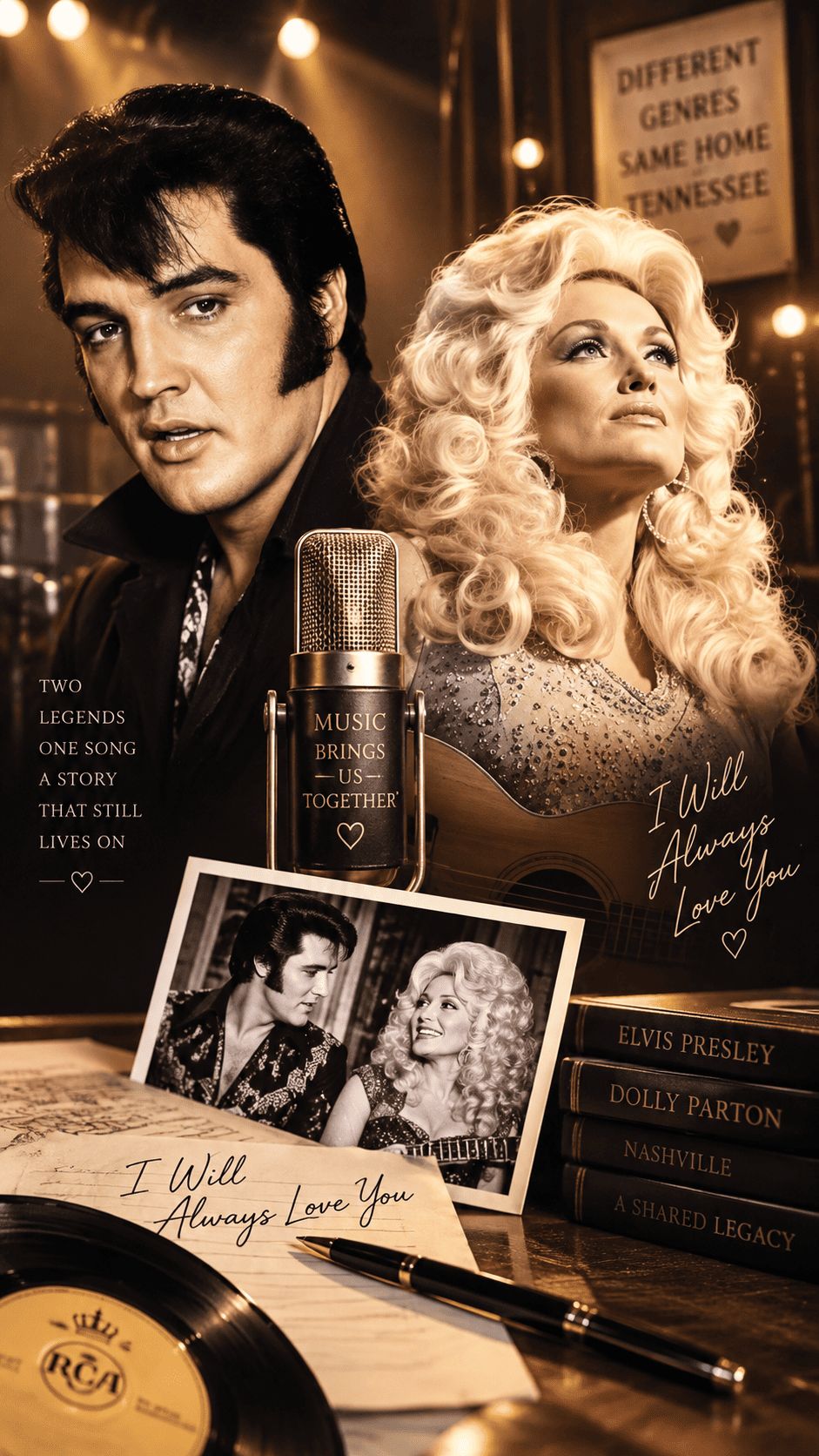
Few imagined collaborations carry that sense of possibility quite like Dolly Parton and Elvis Presley singing “I Will Always Love You.”
It never happened. Elvis never recorded Dolly’s song, and audiences never witnessed the two legendary Tennessee-connected artists sharing a stage for a duet. Yet the story remains remarkably compelling because the possibility was real enough to make people wonder how different music history might have looked if the circumstances had aligned differently.
At the center of the story is Dolly Parton, a songwriter whose greatest strength has always been her ability to turn deeply personal experiences into universally understandable songs. When she wrote “I Will Always Love You,” she was not simply creating another country ballad. She was putting complicated emotions into remarkably simple words and melody. The song emerged from a major turning point in her professional life, when she decided to move forward from her partnership with Porter Wagoner.
The decision was difficult, but Dolly understood something important: leaving does not necessarily mean forgetting.
That idea became the heart of the song.
Years later, the possibility of Elvis Presley recording “I Will Always Love You” introduced an entirely different chapter to its history. Elvis was one of the most recognizable voices in American music, while Dolly was rapidly establishing herself as one of country music’s most gifted writers and performers. Bringing those two artistic worlds together could have produced something extraordinary.
Imagine it for a moment.
A quiet piano introduction.
Dolly Parton standing at one microphone, delivering the song with the conversational warmth that made her storytelling so distinctive. Then Elvis Presley entering with that unmistakable voice, bringing the depth and emotional authority that characterized some of his finest ballads and gospel performances.
The imagined duet does not need a massive production to sound convincing.
In fact, its greatest strength would probably have been its simplicity.
Both artists understood the power of restraint. Dolly could make a listener feel that she was telling a story directly to one person. Elvis, particularly when singing country, gospel, and slower material, could move from tremendous vocal strength to remarkable tenderness within a single performance.
That contrast makes the unrealized collaboration especially intriguing.
Dolly Parton and Elvis Presley also shared something deeper than fame. Both came from humble Southern beginnings. Both developed extraordinary careers without being born into the kind of established musical world that might have guaranteed success. Both understood gospel music, family, faith, tradition, and the storytelling culture of the American South.
Their careers ultimately took very different paths, but their musical roots had more in common than many listeners might realize.
And then came the decision that changed everything.
When the possibility of Elvis recording “I Will Always Love You” arose, Dolly faced an important choice concerning the song’s publishing rights. The arrangement being discussed would have required her to give up a significant portion of her ownership. For a young songwriter, that was an enormous decision.
Dolly said no.
At the time, that decision was painful. Few people could have blamed her for wondering what she might have gained by allowing the King of Rock and Roll to record one of her songs. An Elvis recording could have brought enormous attention to her work.
But Dolly protected her publishing.
That decision would eventually become one of the most consequential choices of her career.
Years later, the importance of retaining ownership became unmistakable. “I Will Always Love You” continued to grow beyond its original country audience, eventually becoming one of the most recognizable songs associated with Dolly Parton’s extraordinary songwriting legacy.
The story therefore becomes much more interesting than a simple tale about a duet that never happened.
It becomes a story about artistic judgment.
About knowing when to say no.
And about understanding the long-term value of something that others may want you to surrender for a short-term opportunity.
That is why the imagined meeting between Dolly Parton and Elvis Presley continues to fascinate music lovers. It represents two possibilities at once.
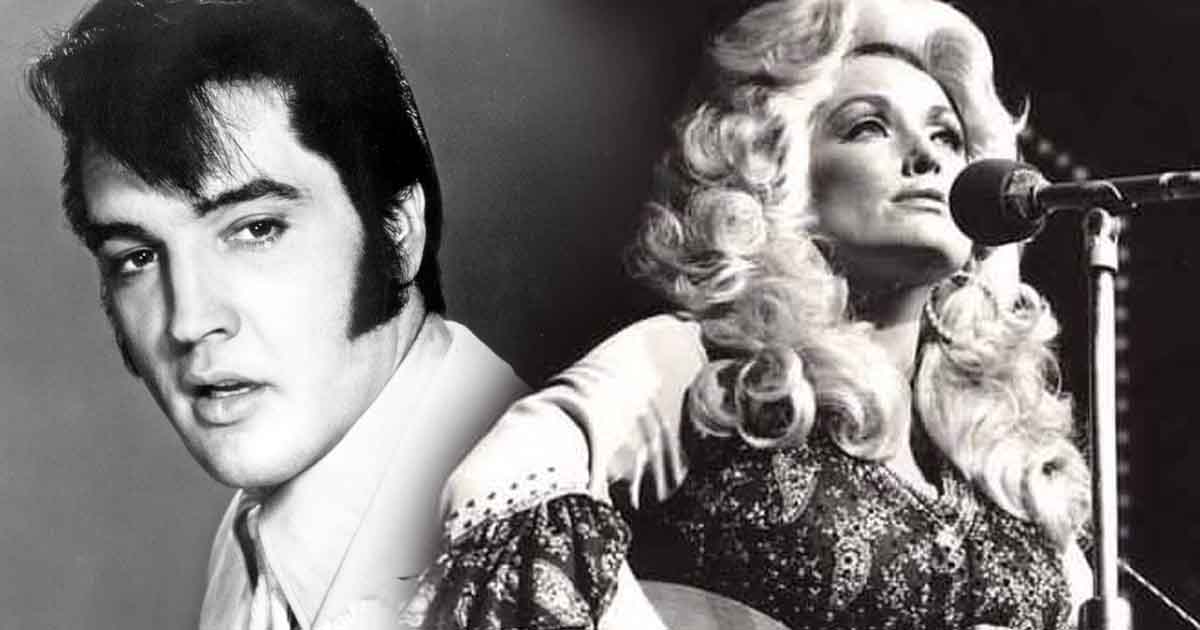
One is the performance we never received — Elvis standing beside Dolly, singing one of the most enduring compositions of the era.
The other is the history that actually happened.
Dolly kept her rights.
She kept control of her song.
And she continued building a career that would eventually place her among the most respected songwriters and entertainers in American music.
Perhaps that is the greatest twist in the story.
The world never got to hear Elvis Presley sing “I Will Always Love You.” We never got the photograph of Dolly and Elvis standing together in a recording studio, never heard their voices meet in harmony, and never discovered whether the imagined duet would have been as extraordinary as generations of listeners have pictured.
But Dolly’s decision ensured that the song remained part of her legacy.
And decades later, the question still lingers:
What would music history sound like if Elvis had recorded Dolly Parton’s song?
We will never know.
But perhaps that unanswered question is precisely what makes the story unforgettable.
Because sometimes, the most powerful chapter in music history is the one that was never recorded.